
Published 2026-09-03
Choose the element from the process condition.
A custom electric heating tube is not selected from voltage alone. The useful design starts with the working medium, target temperature, heat-up time, heat loss, installation space and the available power supply. A correct specification then combines tube material, diameter, length, bend shape, watt density, terminal, seal and mounting method.
1. Confirm the heating medium
State whether the element heats air, water, thermal oil, an oven, a tank, a duct or another process medium. Air and liquid applications can require different surface temperature, watt density, sheath material, immersion depth and safety protection. Corrosive, humid, food-related or high-temperature conditions should be declared before material selection.
- Air and ducts: confirm airflow, pressure drop, recirculation, outlet temperature and finned-element requirements.
- Water and tanks: confirm liquid chemistry, immersion depth, level protection, flange or threaded mounting and sealing.
- Thermal oil: confirm oil grade, flow, film temperature, circulation, expansion space and over-temperature protection.
- Ovens and equipment: provide chamber dimensions, heat loss, sensor location and the available installation clearance.
2. Calculate power, voltage and watt density
3. Match shape, material and mounting
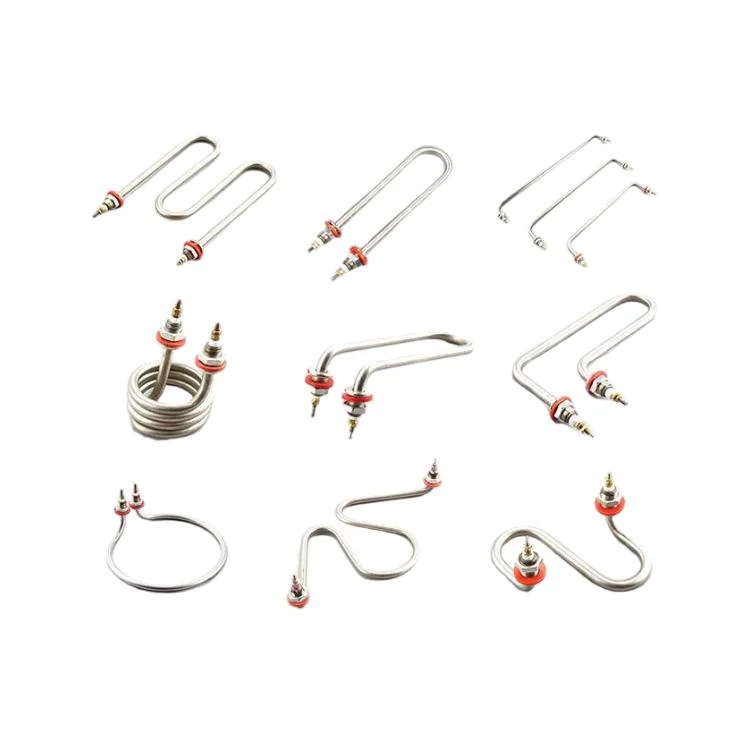
Common forms include straight, U-shaped, finned, flange-mounted and drawing-based bends. The drawing should show heated length, cold length, diameter, bend radius, terminal spacing, flange or thread, seal, bracket and junction-box direction. Stainless steel, Incoloy or another sheath material should be reviewed against temperature, corrosion, humidity and cleanliness conditions.
- Use finned elements only when airflow, pressure drop and surface-temperature conditions are suitable.
- Confirm the terminal and seal arrangement for immersion, flange, threaded or plug-in installation.
- Leave enough clearance for bending, wiring, sensor placement, maintenance and replacement.
- For a replacement, match the original dimensions and electrical data before changing the material or power.
4. Specify control and safety protection
The element may use on/off, staged, PID or PLC control depending on the equipment. Review an independent over-temperature sensor, low-level or low-flow interlock, grounding, insulation, fuse or breaker sizing, contactor or SSR selection and emergency-stop logic. A custom tube quotation should state which protection is included in the complete heater assembly.
5. Send a complete quotation checklist
Send the working medium, target temperature, heat load or power, voltage and phase, tube length and diameter, shape, heated and cold sections, material preference, terminal or flange details, seal, quantity, drawings, photos, existing nameplate and destination country. For air systems also provide airflow and pressure. For liquids provide chemistry, level and circulation data.
Drawing checklist for custom tubular heating elements
Use one dimensioned drawing and identify its revision and units. Separate overall length from heated length, mark the unheated ends, show bend locations and indicate which view defines terminal orientation. Include the mating flange, thread or bracket dimensions where fit depends on the surrounding equipment.
Keep the electrical specification beside the drawing: voltage, phase, total power and the number of elements in the assembly. Mark material or process values that are still provisional. For an existing machine, use the replacement tubular heating element checklist to compare the original specification before requesting a change.
What if some process data is not final?
You can still request a preliminary heating tube review. Clearly mark unknown items such as the heating medium or target temperature, then provide the expected operating range, available voltage, installation space, drawing or photos. Final material, watt density, power, seal and mounting should only be confirmed after the complete process condition is checked.
Related product and support
Review the Custom Industrial Heating Tube product page for model data, customization options, replacement guidance and the engineering inquiry form. The Heating Tube Replacement Guide covers fit, electrical matching and commissioning checks. The Industrial Electric Heater Selection Guide provides broader information about electric heating control and protection.
Buyer FAQ
Custom Heating Tube Selection FAQ
Can Yigao make a heating tube from a drawing?
Yes. Send the drawing, nameplate, medium, target temperature, power, voltage, terminal, flange or thread, quantity and installation photos so the shape and electrical specification can be reviewed before quotation.
How do I choose stainless steel or Incoloy for a heating tube?
Material depends on medium chemistry, temperature, humidity, corrosion, cleanliness, surface loading and service conditions. State the actual process data rather than choosing only from a generic material label.
Can the same heating tube be used for water and thermal oil?
Do not assume interchangeability. Water and thermal oil can require different sheath material, watt density, sealing, flow, immersion and safety controls. Confirm the complete operating condition before replacement.
Can I request a preliminary heating tube quote if the medium or target temperature is not final?
Yes, Yigao can make a preliminary review from the information available, but final material, watt density, sheath, seal, power and mounting cannot be confirmed until the working medium, temperature range and heat-load conditions are known. Mark any unknowns and provide the expected range, drawing or photos so the next data request is clear.