
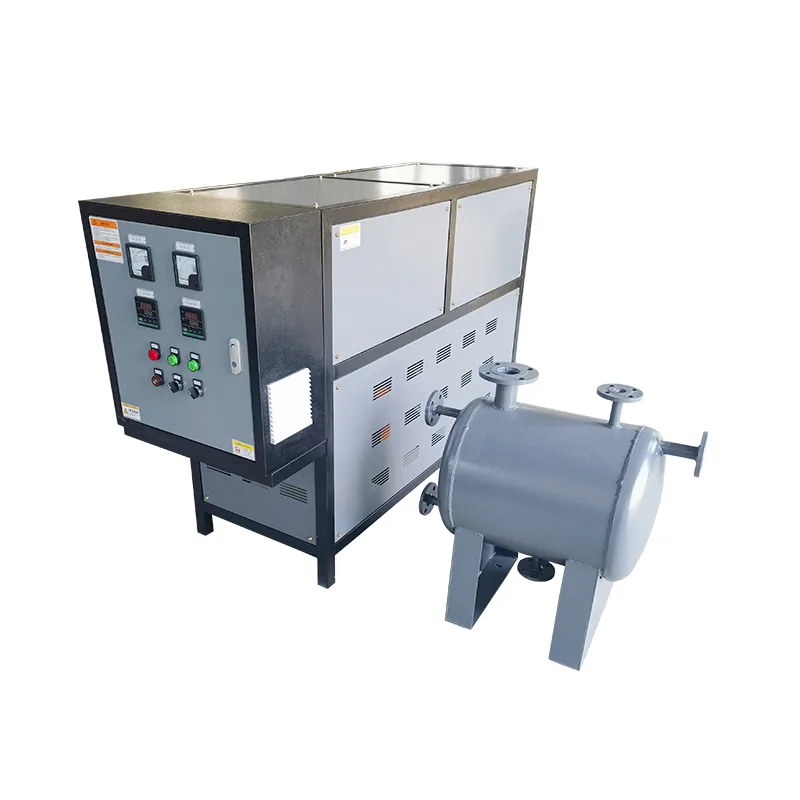
Installation and maintenance guide
Do not energize heat until circulation is confirmed.
This guide expands two service topics published on Yigao's official Chinese website: installation precautions and causes of slow heating. The original material is reorganized here as a buyer and maintenance checklist. Site electrical work, pressure work and hot-oil work must be performed by qualified personnel under the equipment manual and local rules.
1. Check the electrical supply and phase condition
Confirm supply voltage, frequency, phase, cable size, protective device and grounding against the nameplate and wiring drawing. Phase loss or reversed phase sequence may prevent operation or reverse a three-phase pump. Do not bypass a phase monitor or alarm to force a start.
2. Confirm pump rotation and circulation direction
Use the approved jog procedure to confirm pump rotation before continuous operation. Incorrect rotation can reduce flow and create unstable pressure. If rotation is wrong, isolate the power and have a qualified electrician correct the phase connection according to the motor and control drawing.
3. Fill, circulate and vent before heating
- Use the specified heat-transfer oil and confirm the expansion-tank level.
- Open the required process valves and check that supply and return connections are secure.
- Run circulation without heat so the loop can fill and trapped gas can move toward the designed venting point.
- Confirm stable pressure, adequate flow and no leakage before enabling the heating stages.
- Insulate appropriate hot pipework after leak and connection inspection is complete.
Thermal oil can expand, degrade and ignite if a system is incorrectly filled, vented or overheated. Follow the oil supplier limits and the project-specific operating manual.
4. Test alarms and interlocks
Before production, verify the controls that prevent heating under unsafe conditions. Depending on the design, these may include low level, low flow, pump overload, phase loss, over-temperature, overpressure and emergency stop. Test methods should come from the approved commissioning procedure; do not simulate a fault in a way that exposes personnel to live electricity, pressure or hot oil.
5. Record a commissioning baseline before diagnosing a fault
A later “not heating,” slow-heating or unstable-temperature complaint is easier to diagnose when the original operating condition is documented. Record the equipment identifier and drawing revision together with the actual load and the following measured values after circulation is stable:
Use the inspection and test plan guidance to connect these values to the actual order, test method and acceptance criteria. A generic factory test or another project's readings are not a substitute for the installed system baseline.
6. Match the symptom to measurements before replacing parts
7. Diagnose slow heating in the right order
8. Know when to stop and escalate
Use the approved shutdown and isolation procedure if circulation is lost, thermal oil leaks or mists, pressure moves outside the permitted range, repeated over-temperature occurs, the pump makes unusual noise, or smoke, burning smell or an electrical fault is observed. Do not continue operation to collect more data under an unsafe condition. Hot-oil, pressure and electrical inspection must be completed by qualified personnel using the equipment manual and site rules.
9. Do not replace parts from one symptom alone
A slow temperature rise does not prove that the heating elements are defective. Record current by stage, voltage, flow or pump condition, inlet and outlet temperature, pressure, oil condition, heat-up time and control output. Compare those measurements with the drawing and parameter sheet before replacing elements, increasing power or changing the pump.
10. Data to send for technical support
Provide the model and serial information, approved drawing or parameter sheet, voltage, installed power, current by heating stage, heating-medium type, oil volume, mold or equipment size, starting and target temperature, present and baseline heat-up time, supply and return temperatures, pump pressure or verified flow, photos of the panel and pipework, exact alarm code and maintenance history. State whether the problem began suddenly or developed gradually and identify any change made before it appeared.
Buyer FAQ
Mold temperature controller installation FAQ
What should be checked before starting a thermal oil mold temperature controller?
Confirm the power supply and phase condition, pump rotation, thermal oil level, pipe connections, valve positions, insulation and safety alarms. Circulate the system before enabling heat, and do not proceed until pressure and flow are stable.
Why should the circulation pump run before heating?
Pre-circulation helps fill the loop, move trapped air toward the venting arrangement, confirm pump direction and stabilize pressure. Energizing heating elements without adequate flow can create local overheating and equipment damage.
Why is a mold temperature controller heating slowly?
Common causes include failed heating-element stages, insufficient installed power for the load, low circulation flow, incorrect pump rotation, restricted pipework, scale in water systems, carbon deposits or degraded thermal oil in oil systems, heat loss and incorrect control settings.
Can a slow-heating problem be solved by installing a larger heater?
Not automatically. Measure actual element current, flow, inlet and outlet temperature, pressure and heat loss first. Oversizing without checking circulation and controls can cause cycling, local overheating or unstable temperature.
When should thermal oil or pipework be inspected?
Inspect when heating time increases, pressure becomes unstable, flow falls, temperature difference changes unexpectedly, oil darkens or deposits are suspected. The maintenance interval depends on oil grade, film temperature, operating hours, contamination and system design.
What should be recorded during mold temperature controller commissioning?
Record the approved setpoint, starting and stable temperatures, supply and return temperatures, voltage, current by heating stage, pump direction and current, pressure or verified flow, alarm and interlock results, oil grade, load condition and test time. Keep the record with the drawing revision and equipment identifier so later faults can be compared with a known baseline.
When should a mold temperature controller be stopped instead of reset?
Stop the equipment under the approved shutdown procedure when there is loss of circulation, a thermal-oil leak or mist, smoke, burning smell, abnormal pressure, repeated over-temperature, unusual pump noise or an electrical fault. Isolate the relevant energy sources and have qualified personnel identify the cause before restarting; do not repeatedly reset or bypass an interlock.